
It may be from a condition called pine bark adelgid. This is an infestation of reddish-brown insects that hide beneath the waxy coating.

Pine bark adelgids spend the winter as immature females, then mature and lay eggs in late April. When the eggs hatch, both winged and wingless nymphs emerge, but only the wingless insects stay on the tree. They feed on the sap in the trunk and branches, which can weaken the tree. Four generations per year can occur. A heavy infestation can make a tree more likely to attract bark beetles.
Symptoms and signs include:
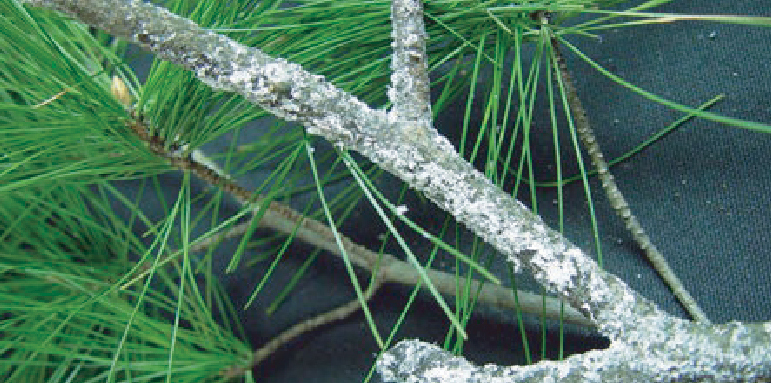
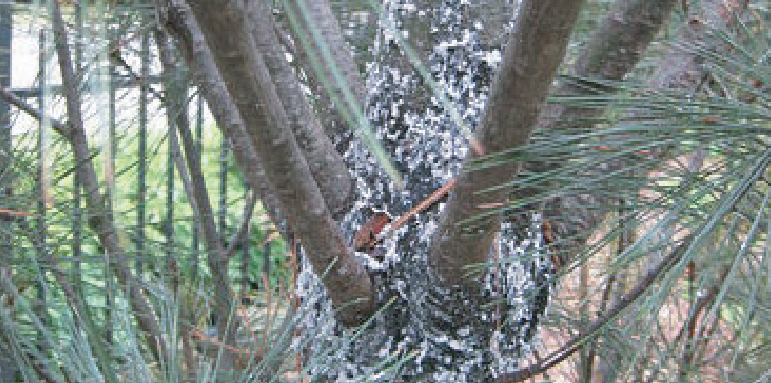


Removing adelgids can normally improve the appearance of the tree and will provide good control of feeding as well. The tree will generally recover quickly after treatment.
From questions to estimate requests, contact us about your residential or commercial project.
We use cookies to improve your experience on our site. By using our site, you consent to cookies.
Manage your cookie preferences below:
Essential cookies enable basic functions and are necessary for the proper function of the website.
Statistics cookies collect information anonymously. This information helps us understand how visitors use our website.
Google Analytics is a powerful tool that tracks and analyzes website traffic for informed marketing decisions.
Service URL: policies.google.com (opens in a new window)
Google reCAPTCHA helps protect websites from spam and abuse by verifying user interactions through challenges.
Marketing cookies are used to follow visitors to websites. The intention is to show ads that are relevant and engaging to the individual user.
Facebook Pixel is a web analytics service that tracks and reports website traffic.
Service URL: www.facebook.com (opens in a new window)
You can find more information in our Cookie Policy and Privacy Policy.