Protecting the trunks of young trees is one of the most important things we can do to help with establishment after planting. It is essential in order to set a tree up for a long and successful life in the landscape. The question to ask is, how to protect your tree in winter?
Winter subjects trees to many hazards, some of which might not immediately come to mind. More than just frigid air, we need to be prepared for the damage that can be caused by the bright winter sun and the foraging of small animals. There are some key steps that can be taken to protect the trunks of young deciduous trees from these risks and help ensure a strong, sound trunk for decades to come. Many different types of wraps and cages are available — choosing the right technique is critical to effectiveness.
How to protect your tree in winter.
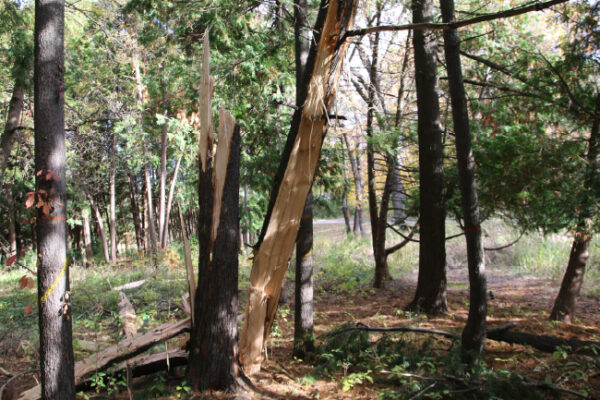
Towards the end of winter, several changes occur. Sunlight gets stronger, and food starts to run out for many of our furry friends. Though these issues are unrelated, the damage that results can cause the same problem: areas of damaged or dead tissue on the trunk, which can lead to stunted growth, defective trunks, and even death of the tree. Once this damage occurs there’s much less we can do for the tree, so we should focus on preventing the damage in the first place. Understanding how this damage takes place is crucial to know how best to prevent it.
How to protect your tree from sunlight damage.
When warm, bright sunlight hits the trunk and branches of a tree, it can heat up the bark to the point that the bark begins to break dormancy. This is part of the normal process of trees waking up from the long cold winter. However, if air temperatures are still below freezing, the bark can refreeze without hardening off. This can lead to damage or death of the bark and cambium layer, creating a sunken wound on the trunk. Over time the tree may be able to grow over and seal the wound. Often these wounds never fully close, however.
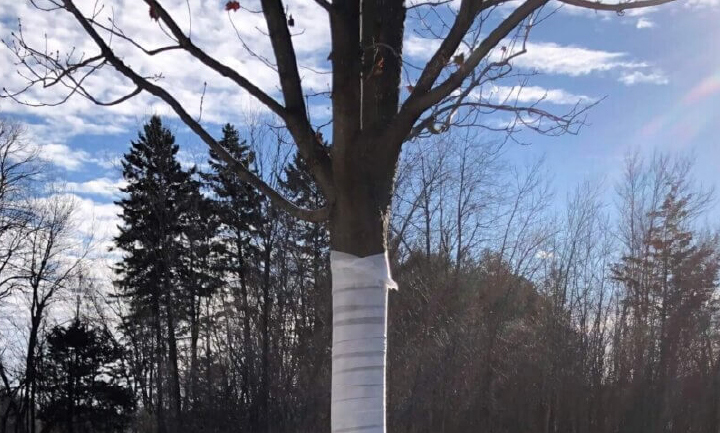
To prevent this damage from occurring, we need to make sure the tissue never warms up in the first place. To do this, we need to keep light off the bark. We can do this by wrapping or covering the main trunk with a material that blocks light. Ideally, this wrap would be white or a light color to reflect as much light as possible.
Wraps come in several materials. For wrapping trunks to prevent sunscald we recommend white polypropylene. Only wrap trunks with cloth or fabric for the winter, to avoid girdling the trunk or having rot develop. We recommend wrapping after the leaves drop in the fall and removing at bud break in the spring. Thanksgiving to St Patrick’s Day is a good rule of thumb.
How to protect your tree from animals.
We also need to prepare for the unwanted attention of animals. For example, rabbits will feed on the thin bark of young trees. They can strip off all the bark they can reach, leading to extensive girdling and even eventual death of the tree. Deer rubbing their antlers on trees can also cause significant damage. Trees with trunk damage will often leaf out for several years after damage occurs. However, if the wound is too large and the connection between the leaves and roots isn’t re-established, eventually the tree will die.
To protect the bark from animals, we need to provide a strong physical barrier. This can consist of wrapping the trunk with tree wrap or wire mesh. If we’re protecting against feeding, the holes in the mesh should be small: ½” or less. Wrapping for deer protection should only be done with wire mesh but can have much larger holes. If caging further away, well-supported chicken wire with larger holes can work as well.
It’s important to account for snowpack when determining how high to wrap or how tall to make cages. Significant snow accumulation can quickly render these measures ineffective. Check wire mesh annually for girdling and adjusted if needed.
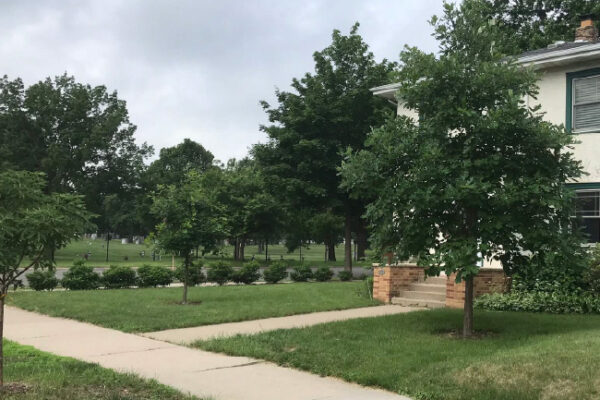
Young trees can face many obstacles during their first years in the landscape. We can take some simple steps to help avoid these issues. Our ISA Certified Arborists and Board-Certified Master Arborists would be more than happy to advise on the best methods to protect your landscape.