Trees add beauty, shade, and value to your property—but when a tree starts to decline, it can quickly become a safety hazard.
A tree may be dying if it shows signs like brittle branches, missing leaves during the growing season, peeling bark, or fungus growing near the base. In Minnesota, extreme winters, pests, and disease are some of the most common causes of tree damage.
Not sure what you’re seeing? Get a professional opinion before the problem gets worse. Request a tree inspection from an ISA-certified arborist at Vineland Tree Care: https://vinelandtree.com/contact/
In this guide, you’ll learn how to identify the warning signs of a dying tree, how to tell if it’s dead or just dormant, and when it’s time to call a professional arborist from Vineland Tree Care.
If you notice any of the following symptoms, your tree may be in trouble:
1. No Leaves During the Growing Season
Healthy trees in Minnesota should leaf out in late spring. If your tree remains bare while others are full, it’s a red flag.
2. Brittle or Falling Branches
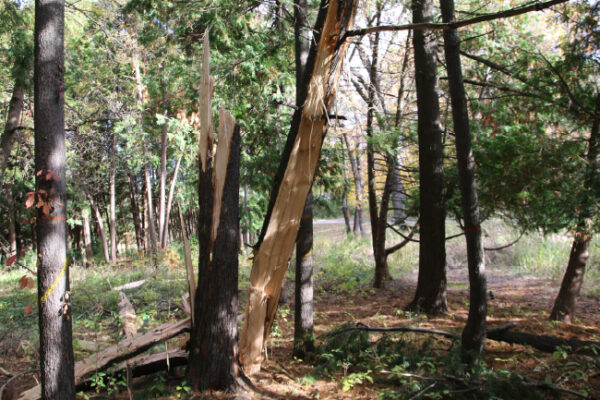
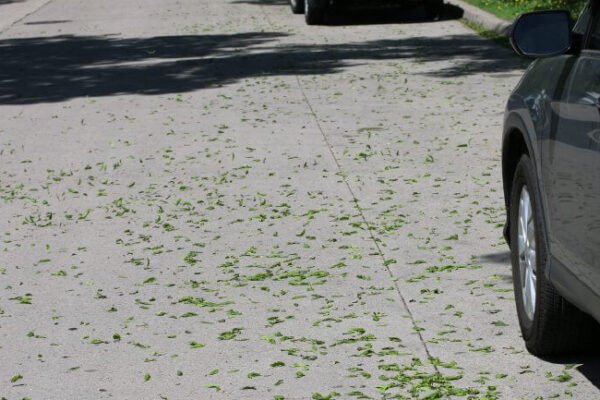
Dead branches become dry and snap easily. If limbs are falling without storms or wind, the tree may be declining. Falling branches can be dangerous. Don’t wait until they hit your home or car.
3. Peeling or Cracked Bark
Bark protects the tree. Large cracks, missing sections, or peeling bark can indicate internal decay.
4. Fungus or Mushrooms at the Base
Fungal growth near the trunk often signals root rot or internal decay—both serious issues. Fungus usually means internal damage is already happening.
5. Leaning Suddenly
A tree that starts leaning unexpectedly may have root damage or structural instability. A leaning tree can fall without warning. This is one of the most urgent signs to act on.
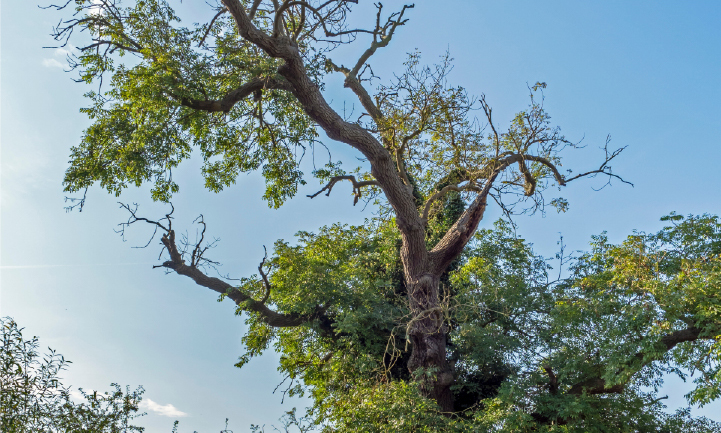
6. Dead Branches in the Upper Canopy (Crown Dieback)
If the top of the tree is dying first, it’s often a sign of advanced stress or disease.
7. Visible Insect Infestation
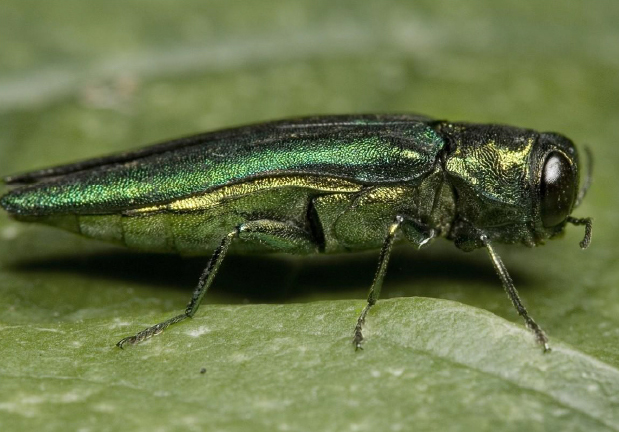
Holes in the bark, sawdust-like material, or increased woodpecker activity can point to pests like the emerald ash borer. Pest damage spreads quickly to nearby trees. Early treatment can save thousands in removals.
In Minnesota, determining if a tree is dead or just dormant is a common concern—especially after long winters.
Here are a few simple ways to check:
Lightly scratch a small section of a twig:
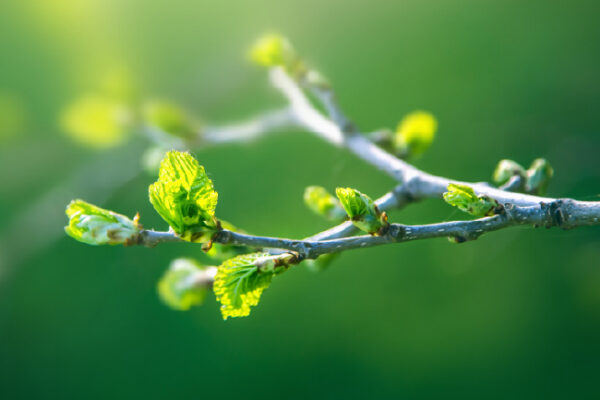
Healthy trees will form buds before leaves appear. No buds usually means no recovery.
Some trees leaf out later than others, but if it’s mid-to-late spring and your tree is still bare, it’s time to investigate further.
Still unsure? It’s easy to misdiagnose tree health. A quick inspection from an ISA-certified arborist at Vineland Tree Care can give you a clear answer. Book a tree check: https://vinelandtree.com/contact/
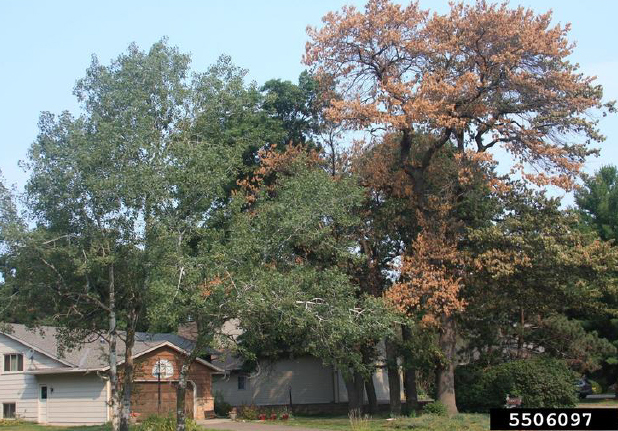
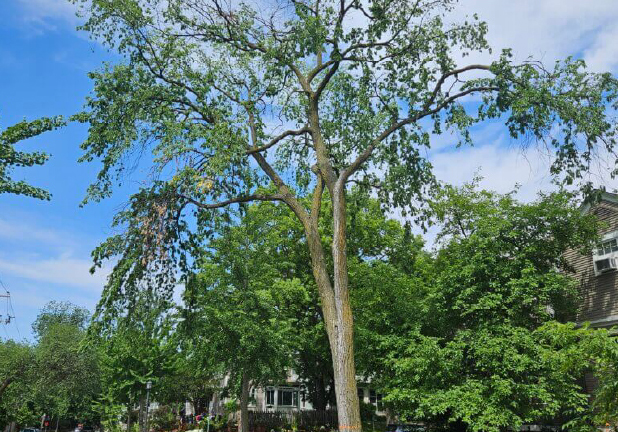
Certain diseases and pests are especially common in the Twin Cities and surrounding areas:
A destructive insect that has killed millions of ash trees across Minnesota.
A fast-spreading fungal disease that can kill oak trees in a single season.
Still a major issue in Minnesota, causing wilting and eventual death.
If one tree is infected, others nearby may be at risk. Professional diagnosis from an ISA-certified arborist at Vineland Tree Care can prevent spread across your property. Request a tree inspection: https://vinelandtree.com/contact/
Trees can decline for several reasons, including:
Many of these issues are fixable—if caught early. Don’t wait until removal is the only option.
In some cases, yes.
A tree can often be saved if:
However, once a tree is severely damaged or unstable, removal may be necessary.
If you’re unsure whether your tree is healthy or dying, it’s best to have a Vineland ISA-certified arborist take a closer look.
Vineland Tree Care has over 30 years of experience serving Minneapolis and St. Paul, helping homeowners diagnose and safely handle tree issues.
Don’t wait until it becomes a hazard. Request a tree inspection from an ISA-certified arborist at Vineland Tree Care today: https://vinelandtree.com/contact/
You should contact us if:
The sooner you act, the more options you have. A quick inspection from an ISA-certified arborist at Vineland Tree Care can prevent serious damage. Request an estimate: https://vinelandtree.com/contact/
Look for missing leaves, brittle branches, peeling bark, fungus growth, and dead limbs.
If caught early, some trees can recover with proper treatment.
Harsh winters, pests, and diseases like oak wilt and emerald ash borer.
If it poses a safety risk or is beyond saving, removal is often necessary. Get the answers to other frequently asked questions here: https://vinelandtree.com/ask-the-experts/
Not sure what your tree needs? Get a professional recommendation from an ISA-certified arborist at Vineland Tree Care: https://vinelandtree.com/contact/
From questions to estimate requests, contact us about your residential or commercial project.
We use cookies to improve your experience on our site. By using our site, you consent to cookies.
Manage your cookie preferences below:
Essential cookies enable basic functions and are necessary for the proper function of the website.
Statistics cookies collect information anonymously. This information helps us understand how visitors use our website.
Google Analytics is a powerful tool that tracks and analyzes website traffic for informed marketing decisions.
Service URL: policies.google.com (opens in a new window)
Google reCAPTCHA helps protect websites from spam and abuse by verifying user interactions through challenges.
Marketing cookies are used to follow visitors to websites. The intention is to show ads that are relevant and engaging to the individual user.
Facebook Pixel is a web analytics service that tracks and reports website traffic.
Service URL: www.facebook.com (opens in a new window)
You can find more information in our Cookie Policy and Privacy Policy.