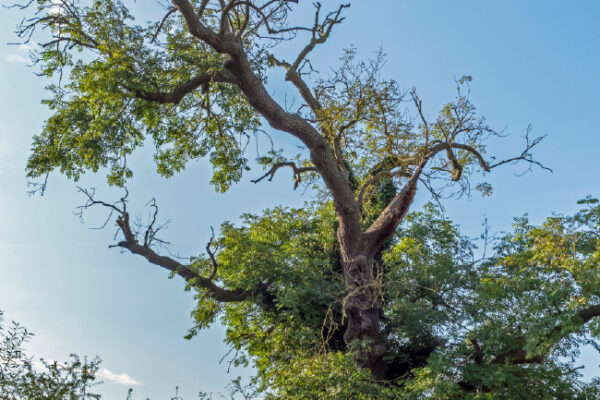
Healthy trees start below ground. Across the Twin Cities, urban and suburban trees can enter fall stressed by summer heat, drought, compacted soil, and restricted root systems. Fall is an important time to evaluate soil and root health and determine whether targeted plant healthcare can help prepare trees for the next growing season.
For some trees, professional soil care can improve growing conditions and support root function and growth as the tree moves toward dormancy. But liquid soil care is not a one-size-fits-all treatment. The right approach depends on the tree, the soil, the site conditions, and the underlying cause of stress.
Trees in Minneapolis, St. Paul, and surrounding Twin Cities neighborhoods often grow in challenging urban and suburban conditions. Unlike forest soils that are continually replenished with organic matter and soil biology, residential soils may be compacted, disturbed during construction, covered by turf, altered by grading, or depleted over time.
Healthy soil helps tree roots access the essentials they need:
Urban and suburban landscapes can place significant pressure on tree roots. Dense or disturbed soils, construction activity, limited rooting space, summer drought, road and sidewalk infrastructure, and repeated foot traffic can all affect how well roots access oxygen, water, and nutrients. These conditions are especially important to evaluate before assuming that fertilizer alone will solve visible tree stress.
Sometimes—but only when the tree and soil conditions call for it. Fall is a useful time to assess nutrient needs because root activity is highest at this time and can continue after above-ground growth has stopped . A properly timed, professionally selected soil care treatment can help address documented deficiencies and support the root system.
The goal is not to make a tree grow faster. Fertilization should be based on the tree’s condition and site. Applying unnecessary fertilizer can waste nutrients. It may not solve the real problem if the tree is struggling because of compacted soil, poor drainage, root damage, or another structural issue.
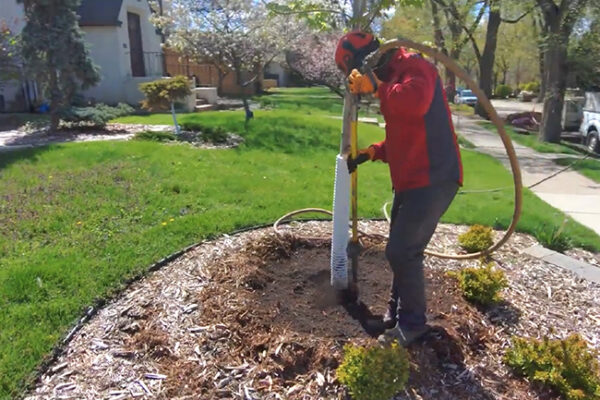
Liquid Soil Care places a highly biological liquid and nutrient solution into the active root zone rather than simply broadcasting fertilizer across the lawn. This allows treatment to target the tree’s growing environment. It can be paired with other soil-care practices when compaction or poor soil structure is also present.
A professional evaluation is important because visible symptoms can have several possible causes. Yellowing leaves, slow growth, or early fall color, for example, could point to nutrient stress—but they are also associated with root restriction, moisture problems, pests, disease, or stem girdling roots.
If soil is heavily compacted, roots may struggle to access oxygen and water even when nutrients are available. This is common around trees exposed to construction equipment, repeated foot traffic, vehicles, or dense urban soils.
Depending on the site, an arborist may recommend soil aeration, pneumatic soil excavation, mulching, or other root-zone treatments before—or in addition to—fertilization. Treating the underlying soil condition helps create a healthier environment for roots rather than addressing only the symptoms above ground.
Not every declining tree has a nutrient deficiencies. Stem girdling roots (SGRs) occur when roots grow against or around the trunk or root flare instead of extending outward normally. As both the trunk and roots expand, this pressure can restrict the movement of water and nutrients and contribute to gradual tree decline.
What Do Stem Girdling Roots Look Like?
One of the easiest clues is the shape of the trunk at ground level. A healthy tree typically widens into a visible root flare. A tree affected by girdling roots may appear to enter the ground like a telephone pole, or one side of the trunk may look unusually flat.
Why Early Fall Is a Good Time to Look for Symptoms
Late summer and early fall can make stress symptoms easier to notice. A tree that changes color significantly earlier than similar nearby trees, for example, could signal an underlying root or vascular problem. Before snow covers the root zone, homeowners can also easily inspect the base of the trunk for an abnormal root flare.
How Arborists Diagnose and Address Girdling Roots
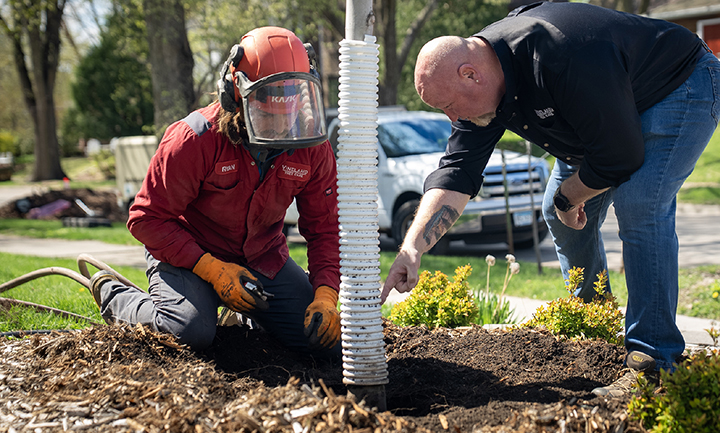
Because problematic roots may be hidden below the soil line, an arborist can use root collar excavation to carefully expose the flare. Pneumatic excavation tools move soil away from roots with compressed air, allowing the root system to be inspected with less risk of damaging important roots.
If girdling roots are present, treatment depends on their size, location, and the condition of the tree. Some roots may be candidates for careful removal. Advanced cases might require a broader tree-health or risk assessment. This is specialized work for a qualified arborist. Vineland Tree Care’s ISA Certified Arborists are experts in safely diagnosing and treating SGRs.
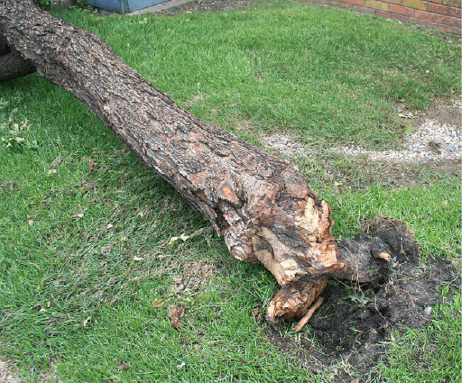
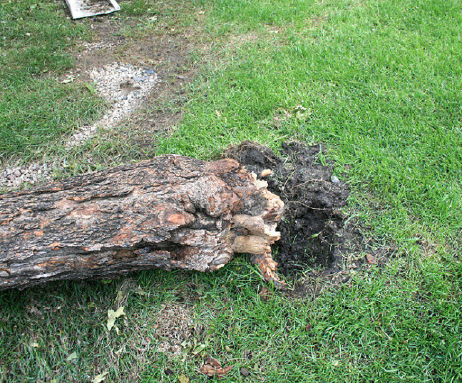
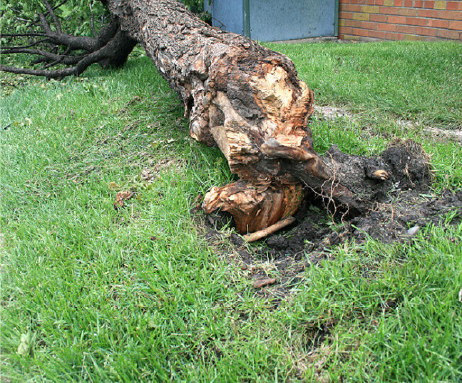
A tree can look stressed above ground while the real problem is happening below the surface. Vineland Tree Care’s arborists serve Minneapolis, St. Paul, and communities throughout the Twin Cities. Our teams evaluate trees, root flares, and surrounding soil to identify whether compaction, nutrient availability, girdling roots, or another condition may be contributing to decline.
For Twin Cities property owners, fall is a practical time to evaluate tree and soil health before winter and create a care plan to support our landscape for the next growing season and beyond.
When should I “fertilize” trees in Minneapolis and St. Paul?
Fall can be an appropriate time to evaluate soil care needs for Twin Cities trees. However, timing and treatment should be based on the tree species, soil conditions, and identified nutrient needs. A professional assessment can determine whether soil nutrient management, soil care, or another root-zone treatment is the best next step.
What are signs of compacted soil around a tree?
Hard soil, standing water, sparse turf, slow tree growth, canopy thinning, and stress following construction or heavy traffic can all indicate that the root zone should be evaluated.
What are stem girdling roots?
Stem girdling roots grow against or around the trunk or root flare. They can restrict normal root and trunk development over time.
Why does my tree trunk look flat on one side?
A flat area near the base of the trunk might be a sign of pressure from a girdling root. An arborist should inspect the tree to determine the actual cause.
What is root collar excavation?
Root collar excavation is the careful removal of excess soil from around a tree’s root flare so an arborist can inspect buried roots and identify problems such as girdling roots.
From questions to estimate requests, contact us about your residential or commercial project.
We use cookies to improve your experience on our site. By using our site, you consent to cookies.
Manage your cookie preferences below:
Essential cookies enable basic functions and are necessary for the proper function of the website.
Statistics cookies collect information anonymously. This information helps us understand how visitors use our website.
Google Analytics is a powerful tool that tracks and analyzes website traffic for informed marketing decisions.
Service URL: policies.google.com (opens in a new window)
Google reCAPTCHA helps protect websites from spam and abuse by verifying user interactions through challenges.
Marketing cookies are used to follow visitors to websites. The intention is to show ads that are relevant and engaging to the individual user.
Facebook Pixel is a web analytics service that tracks and reports website traffic.
Service URL: www.facebook.com (opens in a new window)
You can find more information in our Cookie Policy and Privacy Policy.