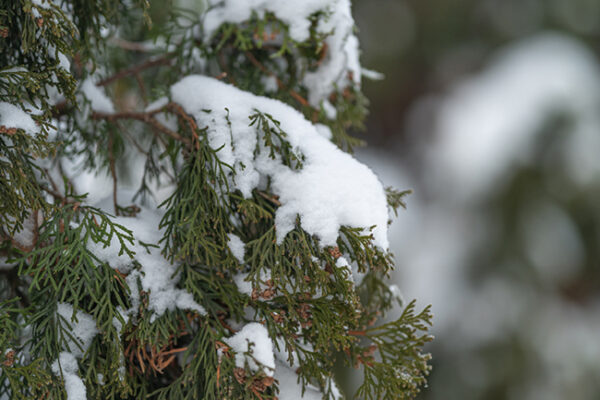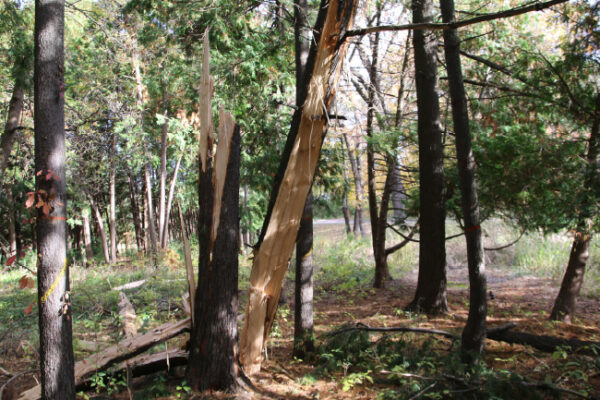
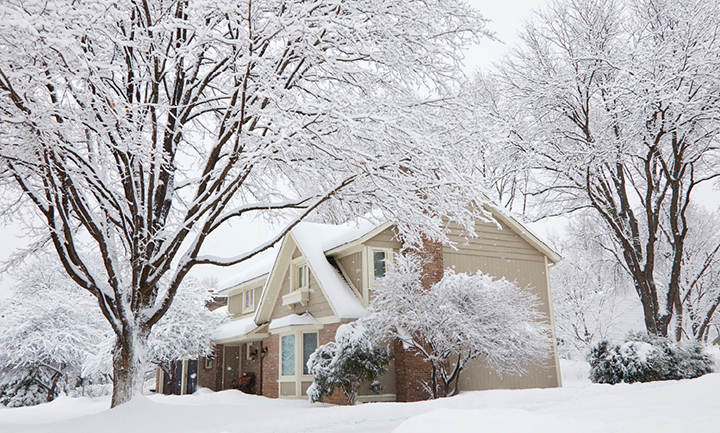
Quick Answer: Heavy, wet Minnesota snow and freezing rain can add hundreds of pounds of weight to tree canopies, leading to bowed branches, split bark, and sudden limb failure—especially on brittle species like silver maples, evergreens, and unpruned mature trees. To protect your Minneapolis or St. Paul property, inspect trees safely from the ground after storms, avoid shaking ice-covered branches, and contact a Certified Arborist for hazardous hanging limbs or structural winter pruning.
Twin Cities winters bring extreme temperature swings, heavy wet snowfalls, and freezing rain events that test the structural integrity of urban and suburban trees across Minneapolis and St. Paul. Understanding how winter weather affects your landscape helps prevent costly property damage and keeps mature trees healthy.
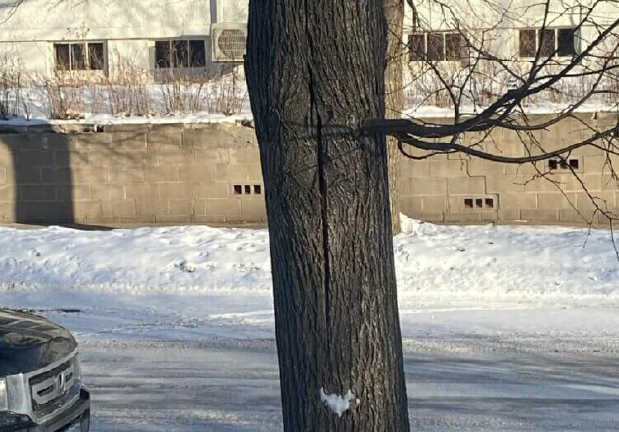
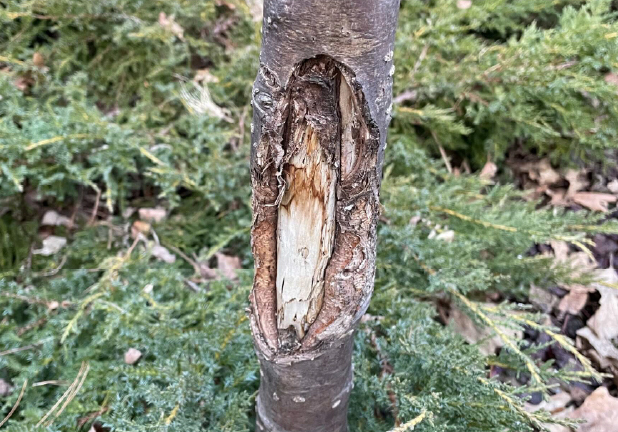
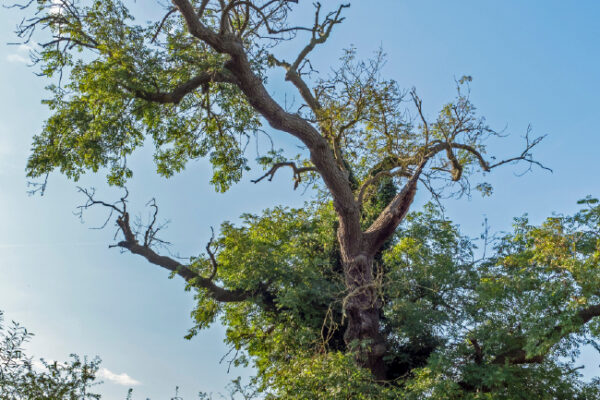
After a major snowfall or ice event in the Twin Cities, walk your yard once conditions are safe to check for early warning signs of failure:
Homeowners often unintentionally cause severe bark tearing or limb breakage when trying to clear snow off landscape trees.
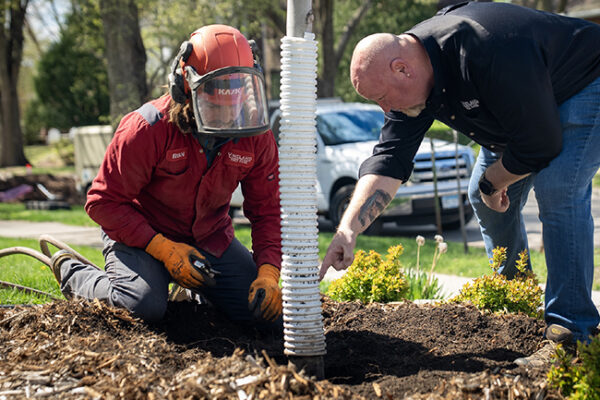
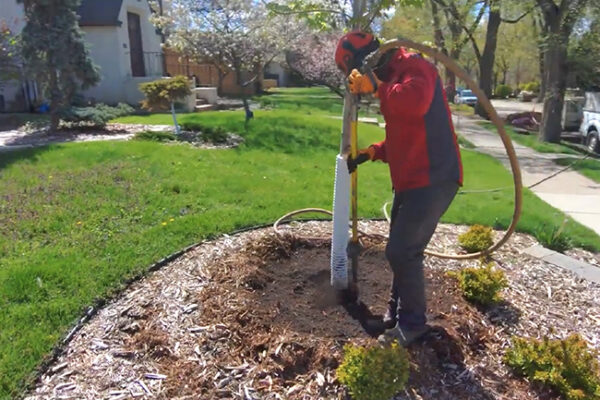
At Vineland Tree Care, our ISA-Certified Arborists and Board-Certified Master Arborists help homeowners throughout Minneapolis and the Twin Cities identify hidden tree health issues — including soil compaction and root stress.
Using professional plant healthcare and soil management techniques, we help improve growing conditions and support long-term tree health.
If your trees appear stressed, declining, or slow to grow, our team can evaluate whether soil compaction may be contributing to the problem.
Do This (Safe)
Gently sweep light, fluffy snow upward using a soft broom before it freezes solid.
Let heavy ice melt naturally whenever the branch is not threatening a structure or walkway.
Keep clear of bowed evergreens until snow sheds or melts.
Avoid This (Damaging)
Never shake or hit ice-coated branches with shovels, rakes, or poles—frozen wood is brittle and snaps easily.
Never climb ladders or use chainsaws on icy ground or tension-loaded storm limbs.
Avoid using rock salt (sodium chloride) near tree root zones; choose calcium magnesium acetate or sand for traction instead.
While severe storms create emergency hazards, dormant winter months (November through March) are the premier window for proactive tree care in Minnesota:
Only if the snow is fresh, light, and reachable from the ground. Use a soft broom to gently push snow upward from underneath the branch. If snow has frozen into ice or branches are severely bent, leave them alone—attempting to knock off ice frequently snaps otherwise salvageable limbs.
A Certified Arborist will evaluate the percentage of canopy lost and whether the main trunk is compromised. Generally, if a mature tree loses less than one-third of its crown and retains a sound main structure, targeted storm pruning can restore its health and balance. Trees with split trunks, uprooted bases, or more than 50% canopy loss typically require safe removal.
Call a local, insured tree service immediately if a fallen or cracked tree is resting on your home, garage, or vehicle; blocking a driveway or street; or if a large hanging limb is suspended over a high-traffic area. Avoid unverified “storm chasers” knocking on doors after severe weather—always confirm ISA Certified Arborist credentials and proof of insurance.
Vineland’s Certified Arborists inspect your property to identify cracked limbs, structural hazards, and hidden canopy stress. We provide a clear written proposal covering safe debris cleanup, precision branch pruning to prevent future breakage, or technical crane removal for complex urban properties—always followed by meticulous yard cleanup.
Whether you are dealing with broken branches after a heavy snowstorm or want to proactively prune vulnerable limbs before the next freeze, Vineland Tree Care brings over 30 years of local arboricultural science to Minneapolis, St. Paul,and surrounding Twin Cities communities.
Need a winter tree inspection or storm damage assessment?
Contact our Certified Arborists at 612-872-0205 or request a consultation online at vinelandtree.com.
From questions to estimate requests, contact us about your residential or commercial project.
We use cookies to improve your experience on our site. By using our site, you consent to cookies.
Manage your cookie preferences below:
Essential cookies enable basic functions and are necessary for the proper function of the website.
Statistics cookies collect information anonymously. This information helps us understand how visitors use our website.
Google Analytics is a powerful tool that tracks and analyzes website traffic for informed marketing decisions.
Service URL: policies.google.com (opens in a new window)
Google reCAPTCHA helps protect websites from spam and abuse by verifying user interactions through challenges.
Marketing cookies are used to follow visitors to websites. The intention is to show ads that are relevant and engaging to the individual user.
Facebook Pixel is a web analytics service that tracks and reports website traffic.
Service URL: www.facebook.com (opens in a new window)
You can find more information in our Cookie Policy and Privacy Policy.