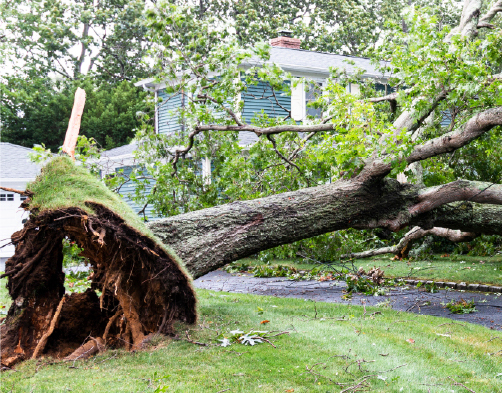
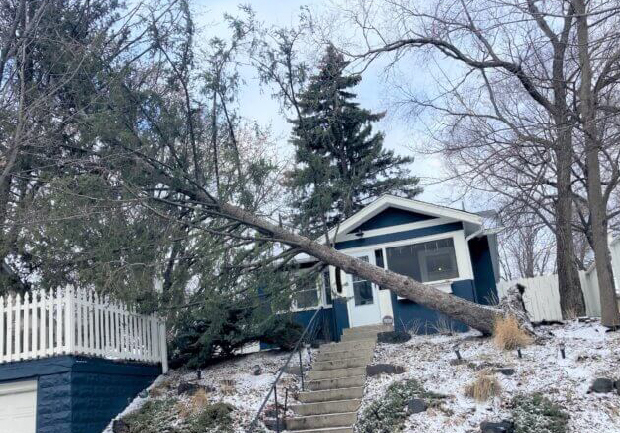
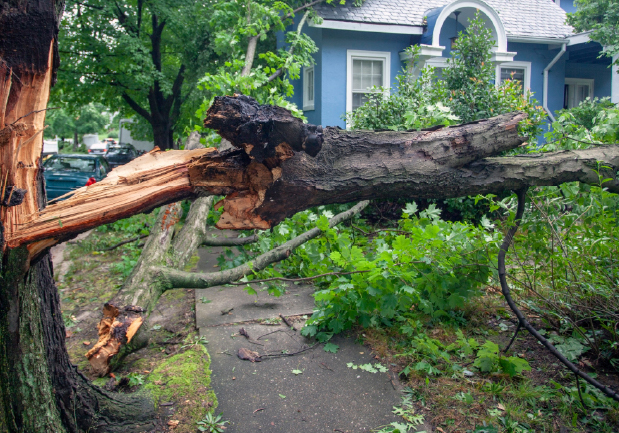
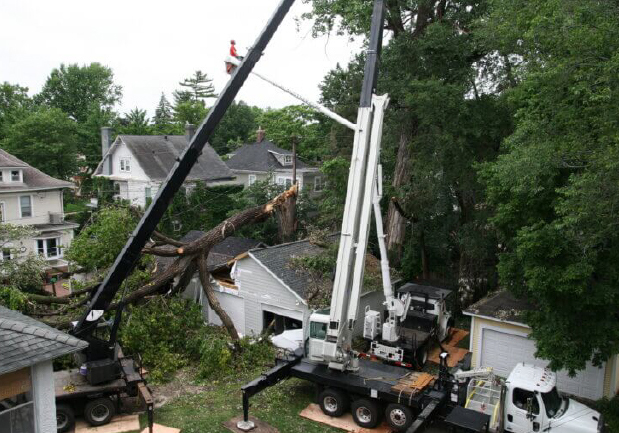
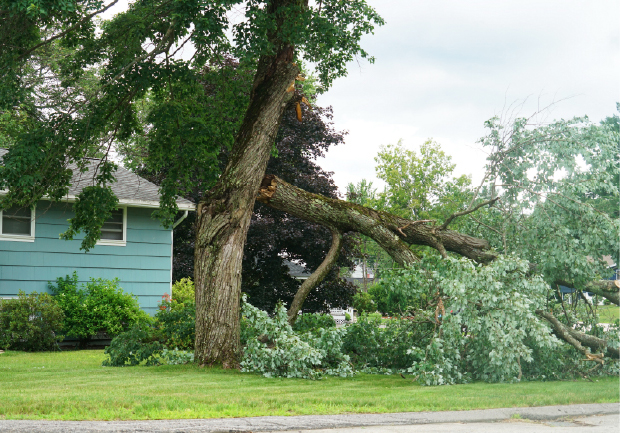
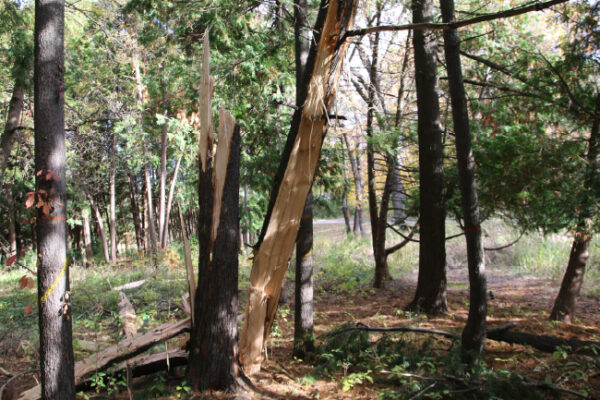
Here in Minnesota, we’re fortunate to not have to deal with some of the worst that Mother Nature can throw at us, but we do still have significant storm events. While trees are quite resilient, everything does have a breaking point. When storms come through our area, we inevitably end up dealing with broken limbs, uprooted trees, and other damage.
After a storm, our focus as arborists has to shift to disaster response. Because we possess the skills and tools to assist with clean up, we have an obligation to help. However, when we’re hit by really major storms, we are forced to triage damage. We have to prioritize the most significant issues which sometimes requires us to make hard choices.
Trees Can Uproot Year-Round
When we communicate with clients about our availability to deal with storm damage, we go by this somewhat tongue-in-cheek order:
Counted in the first category is also opening up access for other emergency responders and ensuring people are safe. Preservation of life has to be our first priority, then we shift focus to preventing further property damage. Once those two issues are addressed, we can then begin to deal with facilitating repair of property damage by removing tree debris. Finally, once we’ve addressed all risks to life, limb, and property, we can begin to deal with general clean up.
Responding to storms is a very dynamic process. As the storm passes and people come up from their basements and shelters, we can begin to assess the damage. When our phone begins to ring, we start to get an understanding of what has happened. As the hours tick by, we see trends in the location, type, and severity of damage. These trends allow us to focus our efforts to the hardest-hit areas, and allow our crews to be as efficient and safe as possible.
Managing our schedule after a storm is one of our hardest tasks. It’s never easy to call a client to tell them that we need to postpone their project, especially when they’ve booked work several months prior. We always do our best to honor our commitments to our clients, but also very much appreciate their understanding when we need to switch gears and focus on storm response.
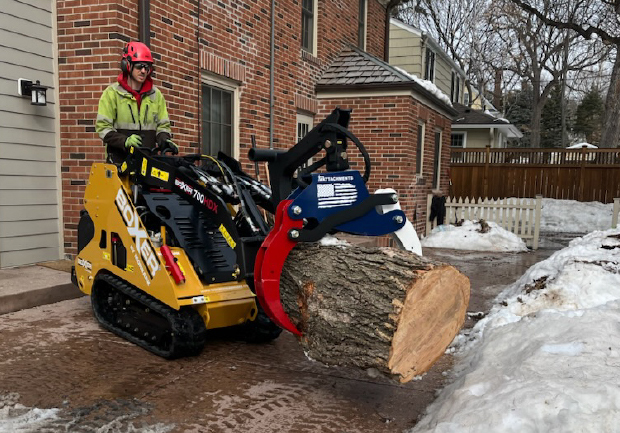
The first week after a major storm event is engaging, challenging, and rewarding. Storm response is some of the most technically difficult and dangerous work we do. Ask any arborist whether they like storm damage work, and the answer will be a resounding yes. However, as the days tick by, fatigue will build. The work shifts from using cranes and equipment to remove trees from structures to picking up downed limbs from yards. Eventually though, things begin to return to normal.
Our team of Minneapolis-based ISA Certified Arborists and Board Certified Master Arborists are standing by to assist with any issues you have with your trees. Contact us today to schedule an assessment of your trees, to anticipate future risk, or respond to a storm event.
From questions to estimate requests, contact us about your residential or commercial project.
We use cookies to improve your experience on our site. By using our site, you consent to cookies.
Manage your cookie preferences below:
Essential cookies enable basic functions and are necessary for the proper function of the website.
Statistics cookies collect information anonymously. This information helps us understand how visitors use our website.
Google Analytics is a powerful tool that tracks and analyzes website traffic for informed marketing decisions.
Service URL: policies.google.com (opens in a new window)
Google reCAPTCHA helps protect websites from spam and abuse by verifying user interactions through challenges.
Marketing cookies are used to follow visitors to websites. The intention is to show ads that are relevant and engaging to the individual user.
Facebook Pixel is a web analytics service that tracks and reports website traffic.
Service URL: www.facebook.com (opens in a new window)
You can find more information in our Cookie Policy and Privacy Policy.